How to Encourage Creativity in Young Children
Simple, everyday ways to support your child’s imagination through open-ended questions, favourite themes and plenty of freedom to experiment.
Children are naturally imaginative.
A cardboard box can become a rocket.
A sofa can become a castle.
A blue scribble can apparently be a dinosaur driving a fire engine.
Supporting creativity at this age isn’t about teaching children how to produce perfect artwork. It’s about giving them permission to experiment.
Give them simple materials
Creativity doesn’t require an enormous craft cupboard.
Crayons, paper, colouring books, blocks, stickers and a few household objects can go a long way.
Too many choices can sometimes make things harder.
Ask open-ended questions
Instead of:
“What colour should the dinosaur be?”
Try:
“What colour would you like your dinosaur to be?”
Instead of telling them what to build, ask:
“What could we make with these?”
Small changes like this put the child in charge of the idea.
Don’t correct everything
Preschool creativity doesn’t need to look realistic.
If the sun is green, that’s okay.
If a digger is flying through space, even better.
Children gradually learn how the real world works. Imaginative play gives them somewhere to explore what could happen instead.
Use themes they already love
Children are much more likely to engage with creative activities when the subject interests them.
One child might love dinosaurs.
Another may choose unicorns every single time.
Someone else may be obsessed with emergency vehicles.
Starting with their interests makes creativity easier.
Create opportunities for boredom
It can be tempting to fill every quiet moment.
But a little boredom can be useful.
When children have space without constant entertainment, they often begin inventing their own games.
This is one of the reasons we like incorporating simple screen-free activities into everyday family routines.
Make stories together
Storytelling is one of the easiest ways to encourage imagination.
Choose a character and ask:
“Where are they going?”
“Who do they meet?”
“What happens next?”
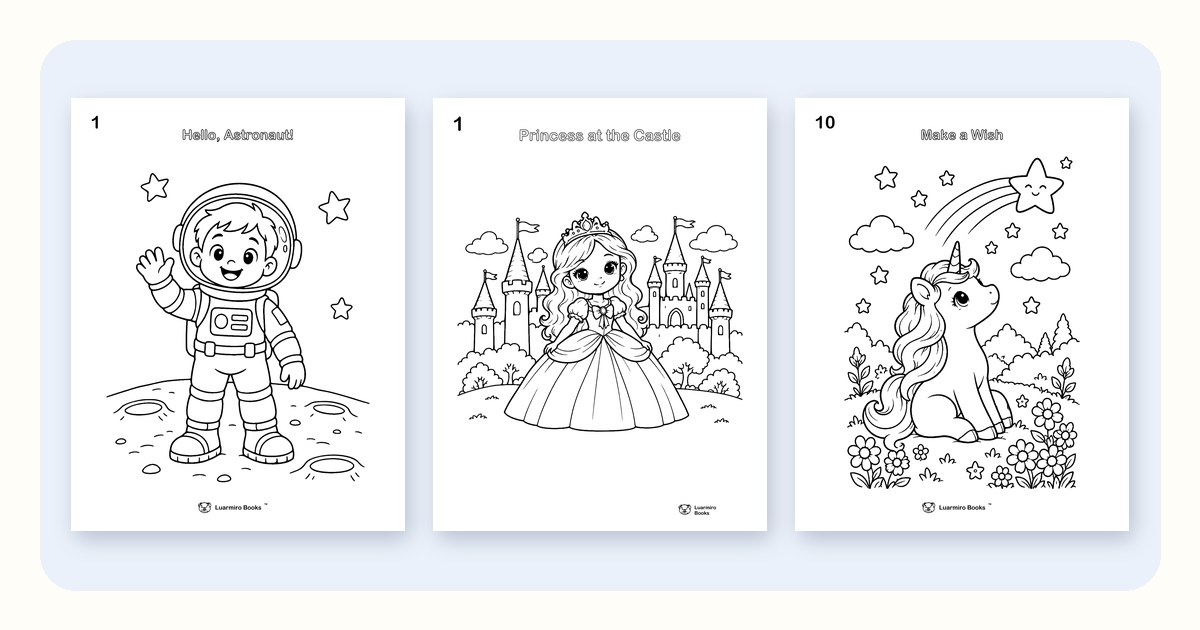
You can even use a finished colouring page as the starting point.
Praise the process
Instead of focusing only on whether something looks good, notice what your child did.
“You used so many different colours.”
“You worked really hard on that.”
“Tell me about your picture.”
This helps move attention away from trying to produce the “right” result.
Creativity is something children practise
You don’t have to teach a child to be imaginative.
Often, you simply need to give them time, materials and permission.
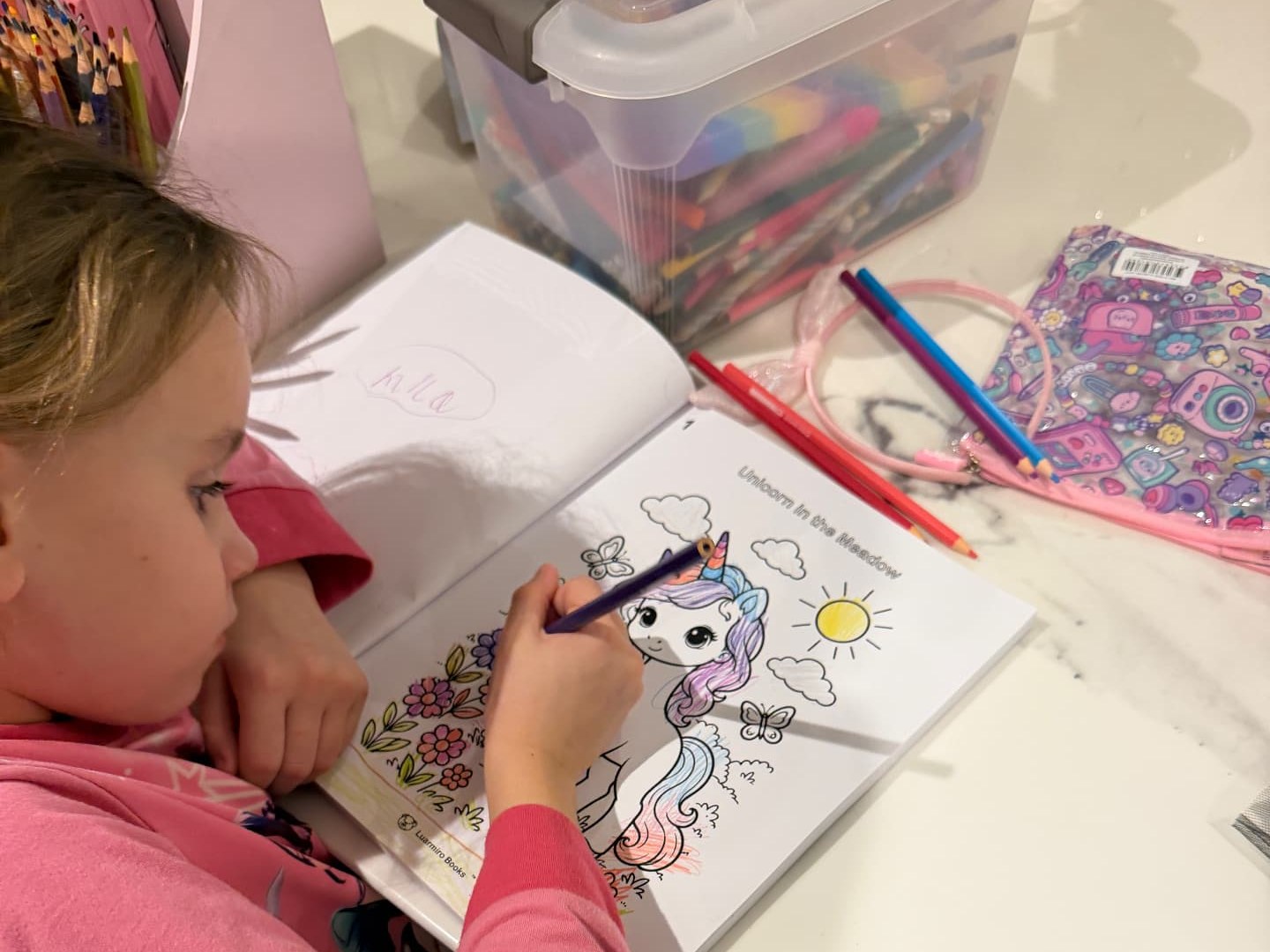
Colouring is one easy way to do that, but so are building, storytelling, pretend play and drawing.
For more ideas, see our guide to 10 screen-free activities for children aged 3–5.